Best Brazilian Coffees of 2026
Brazil grows more coffee than any other country on Earth, but you won't find it ranked here alongside 20+ competitors the way Ethiopia or Colombia are — every pure single-origin Brazilian coffee in our catalog is natural-process and grown in Minas Gerais, a far narrower profile than most origins we carry. We ranked all 9 by expert score to find the best you can buy right now.
Best Brazilian Coffees, Ranked
Rankings are based on expert ratings across all 9 pure single-origin Brazilian coffees in our database, sourced from 9 specialty roasters — every qualifying Brazilian single-origin coffee we carry makes this list. Prices and availability reflect the latest data in our catalog.
Why Brazilian Coffee Is (Almost) Always Natural-Process
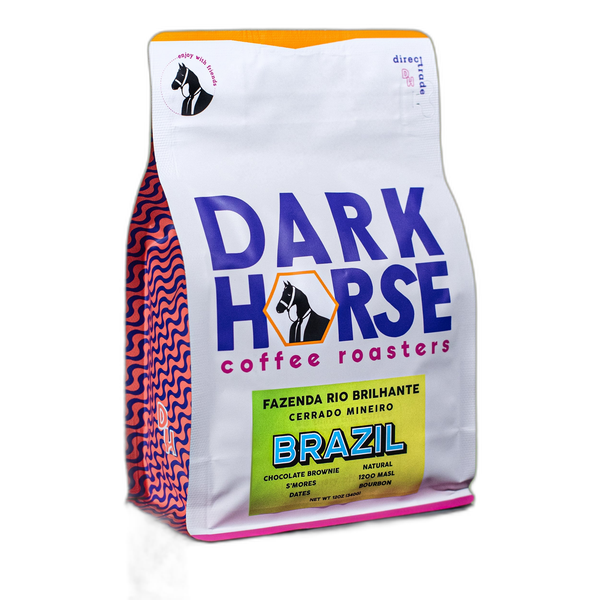
9 of the 9 pure single-origin Brazilian coffees in our catalog — 100% — are natural-process, compared with 25.4% sitewide across all 619 coffees we carry. That's not a stylistic choice so much as a function of geography: Brazil's coffee farms sit on comparatively flat, moderate-altitude terrain that can be harvested by machine and dried whole on huge patios or raised beds, instead of the steep, hand-picked slopes most other origins farm. The result is coffee with low acidity, a heavy, syrupy body, and sweet chocolate, nut, and dried-fruit notes — the opposite profile from the bright, washed cups Kenya or Costa Rica are known for.
Minas Gerais: Brazil's Coffee Heartland
9 of 9 coffees on this list come from Minas Gerais state — every single one — split across three growing zones within it:
How to Brew Brazilian Coffee
Brazil's low-acid, heavy-bodied, chocolate-forward profile makes it the go-to base for espresso, but it holds up well across other methods too:
- Espresso: The classic use for Brazilian beans — low acidity and a syrupy body produce a smooth, crema-heavy shot, which is why Brazil anchors more espresso blends worldwide than any other single origin. See full espresso guide →
- Moka Pot: The pressure and concentration of a moka pot suit Brazil's full body well, delivering an intense, chocolatey cup without the bitterness a brighter origin can develop under pressure. See full moka pot guide →
- Drip & French Press: A gentle, easy-drinking everyday coffee — the low acidity makes it forgiving even with imprecise technique. See brewing guides →